

Date Archives February 2025

The Bland Truth: A Critique of Portuguese Cuisine

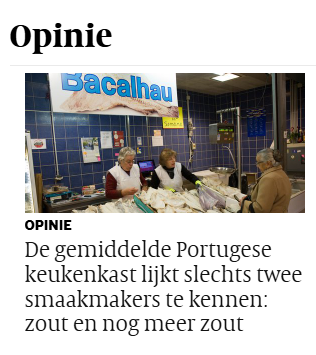
I wrote an unsalted opinion on my experiences with the Portuguese kitchen, The Bland Truth: My Critique of the Portuguese Kitchen and was published in the Dutch newspaper De Volkskrant on February 28 and in the Portuguese newspaper Diário de Notícias on March 3, 2025.

Below is the English version of this article:


      Logo

The Bland Truth:
My Critique of the Portuguese Kitchen

Portuguese food is great — when it wants to be. After living in Portugal for nearly two years, the Portuguese cuisine remains a culinary enigma to me. With fresh fish and seafood that would entice Neptune himself and olive oil of a quality that deserves museum veneration, the recipe for success seems complete. All the more remarkable, then, that a country which once dominated the global spice trade has devolved into a gastronomic culture where ‘overcooking’ appears to be the motto.

 

Walking through the streets of Lisbon, one might think that Portuguese cuisine still reflects the rich history of the country as a colonial power. This was, after all, the empire that gave Thai cuisine its spiciness and introduced new flavours from Africa to India. But anyone entering a traditional Portuguese restaurant encounters a culinary reality that would make Vasco da Gama shudder.

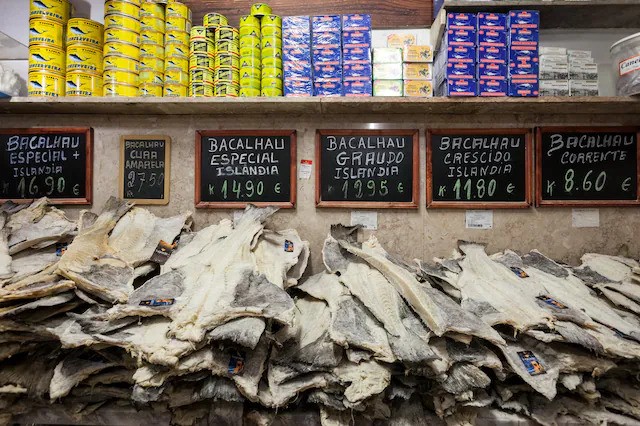
Take, for instance, the national obsession with bacalhau, the dried and salted cod that, according to legend, can be prepared in 365 different ways. After tasting what feels like the complete annual assortment, I must conclude that the variations differ mainly in name – the taste remains remarkably consistent: salt. Whether it’s bacalhau à brás (with egg and potato), bacalhau com natas (in cream sauce), or simply boiled bacalhau, the result is reminiscent of an old newspaper soaked in seawater.

The treatment of vegetables also raises questions. In a country blessed with fertile soil and abundant sunlight, one would expect vegetables to retain their natural flavour. Instead, they are often so thoroughly overcooked that even the most vital broccoli capitulates into a colourless mass without character.

It must be said that this culinary experience is at least friendly to one’s wallet – for about ten pounds, you get a generous portion of any dish in most local restaurants. The question is whether quantity outweighs the quality of preparation.

Most intriguing is how a nation that once controlled the global spice trade now uses spices so sparingly. The average Portuguese kitchen cupboard seems to know only two flavourings: salt and more salt. It’s as if somewhere in history it was decided that the experiment with spices had lasted long enough.

For the culinary adventurer in Lisbon, there is hope in the form of international restaurants. African establishments serve piri-piri chicken that actually tastes of more than just hot pepper. Indian restaurants offer curries that recall Portugal’s rich history in Goa. Even Brazilian restaurants show how Portuguese cuisine might have developed if it hadn’t decided somewhere in the eighteenth century that further evolution was superfluous.

The tragedy is that all the ingredients for culinary greatness are present. The fish and seafood are among Europe’s finest, the olive oil is truly sublime (mine comes directly from the farmer), and the possibilities for integrating influences from former colonies are endless. Yet traditional Portuguese cuisine manages to transform this promising foundation into dishes that make British deep-fried cuisine almost seem avant-garde.

Let this not be a definitive judgement, however, but rather a call for culinary revolution. For somewhere, in a forgotten kitchen cupboard in Lisbon, there must still be a dusty spice jar that remembers more glorious times. A time when Portuguese cooks not only explored the world but also dared to experiment with more than just salt and nostalgia. Perhaps it’s time to open that jar again, if only to give rest to the spirit of Vasco da Gama – for even the most hardened explorer deserves better than endlessly overcooked bacalhau.

Who knows, if Portugal recalibrates its culinary compass, we might find our way back to that time when the country not only traded spices but actually used them.

Until then, it remains a gastronomic mystery: how a nation that taught the world to season has itself become lost on the way to the spice racks of history. But hey, there’s always pastéis de nata – because even in the darkest culinary times, there must be something to eat your worries away with.
It did not stay with only this post, so continue here to see how the response was:

The Bland Truth: The Public Response


Is Upwork Worth It in 2026? A Freelancer’s Review After 4 Years

I paid Upwork over $5,000 in fees last year. And Honestly? I’d Do It Again.

When I looked at my Upwork earnings report at the end of last year, one number stood out in bold: over $5,000 in fees. That’s how much I paid the platform just to be able to do my job. Just to show up, send proposals, work with clients, and get paid.

And strangely enough… I didn’t feel angry. I wasn’t frustrated or bitter. In fact, I felt – dare I say it? – okay with it.

Actually, more than okay.

Because after four years of freelancing full-time through Upwork, that $5,000 feels less like a loss and more like rent. Rent for the space where I built a career. Rent for the freedom to live and work on my own terms.

So yes, I’m still here. Still working through Upwork. Still paying the platform’s cut. And I’ll gladly keep doing it in 2025 and beyond.

Here’s why.

Upwork Gets a Lot of Flak

Over the years, I’ve had plenty of people ask me how I can stand working through Upwork. They roll their eyes at the fees. They groan about the competition. Some are convinced it’s just a glorified race to the bottom, where the lowest bidder always wins.

And look, I get it. Those concerns aren’t made up. For plenty of freelancers, the platform can feel crowded, inconsistent, and even discouraging at first. I’ve been there.

But my experience has been… different.

Not because I’m some kind of exception, but because I treated Upwork from day one like a long game. I didn’t just fire off 50 copy-paste proposals and hope something stuck. I showed up consistently. I refined my profile. I learned how to pitch. Then how to pitch better. I found my voice, and the clients who actually wanted to pay for it.

And once that started happening, something shifted: Upwork wasn’t just a freelancing platform anymore. It became a real foundation for my work, and in many ways, my life.

Wait! What is Upwork?

In case you’ve never dipped your toes into this freelancing pool: Upwork.com is a platform that connects freelancers like me with clients from all over the world. Writers, designers, coders, marketers, translators, you name it. If it can be done remotely, someone’s hiring for it.

And while Upwork does take a 10% to 15% cut of everything you earn (yes, ouch), they also handle all the admin headaches, contracts, weekly payments (!), client disputes, deadlines, even time tracking if you want it.

Basically, they let me just focus on what I do best: delivering the work.

Upwork screenshot

Why I Stay: Freedom, First and Always

I’ll be honest with you: I was never meant for the 9-to-5 life. You can read that in my bio, my life has been off-the-charts from the regular norm. The idea of showing up at the same desk every day, clocking in and out under fluorescent lights, asking permission to take a lunch break or, god forbid, step away for a pee? It made my skin crawl. But you get a salary at the end of the month! Some people thrive in that structure. I just don’t.

Freelancing through Upwork gave me a way out of that world entirely. These days, I get to decide where I work (hello from Cambodia!), when I work, and who I say yes to. I’ve answered client messages from a breezy café down the slopes of Mount Kilimanjaro. I’ve edited reports from a beachview balcony in Sri Lanka, and taken calls barefoot after a morning swim in Portugal. The setting changes, but the work gets done, and that’s what matters.

That kind of freedom isn’t a perk. It’s the whole point. It’s what keeps me showing up on this platform, even with the fees and the quirks and the occasional late-night deadline (or the 2 am message from a totally different time zone asking for help within an hour). Because the real currency for me isn’t just the money, it’s the freedom to live on my own terms.

And here’s what most people don’t realize about that freedom: it compounds. Every year I work this way, I get better at managing my energy, at setting boundaries, at knowing my worth. I’m not burning out at 55. I’m not dreading Mondays. I’m building something that actually belongs to me.

Global Clients, Endless Variety

One of the unexpected joys of freelancing on Upwork has been the sheer variety of people and projects. One week I’m translating a romance novel set in a small town in Canada, the next I’m editing an investor pitch for a startup in Berlin. One day later a major streaming network asks me to dive into Dutch translations of very important legal documents they needed yesterday.

I’ve worked with CEOs, poets, backpackers-turned-entrepreneurs. Some projects last a day, others turn into long-term collaborations that span years. A few of my best clients now, I’ve been working with for three years straight. They know me. They trust my work. They pay well. That kind of relationship doesn’t happen on job boards where everyone’s a stranger – it happens when you show up consistently, deliver quality, and actually give a damn about the outcome.

It keeps things fresh. And every job teaches me something, about language, about business, about culture. I’ve learned more about global commerce, startup culture, and how different industries communicate just by working with this diverse clientele than I ever would have in a traditional office setting.

Honestly, I never would’ve built a portfolio this diverse if I’d just stuck around locally.

The Security Bit No One Talks About

One of the most exhausting parts of freelancing, especially off-platform, is the uncertainty. You deliver the work, you send the invoice… and then wait. Sometimes you wait days. Sometimes weeks. You send your client a reminder and wait again. Sometimes you wait forever, because the client disappears into the void and suddenly you’re chasing down payment like a debt collector with a polite smile. Dude!

Been there. Hated it.

That’s exactly why I stick with Upwork. Four years in, and I’ve never had to chase down a payment. The whole escrow thing means clients put the money up front – before I even start – and once I deliver, boom, it’s mine. If things get messy? Upwork Support jumps in. Even when someone comes to me with an “emergency” project that needs to start right now, I still wait. Contract first, payment secured, then I work. I don’t care how urgent they say it is.

And that’s not me being difficult – that’s me being smart. I’ve learned through experience (and watching other freelancers’ horror stories) that the clients worth working with won’t mind that boundary. The ones who pressure you to skip the contract? Those are the ones who ghost on payment.

Is the platform perfect? No. Nothing is. But honestly, not having to send those awkward “just checking in on the invoice” emails ever again? The peace of mind is priceless. It lets me focus on the work instead of the drama. It lets me sleep at night knowing my money is secured.

So About Those Fees

Upwork moved from a flat fee to a variable service fee model, from 0% to 15%. And yes, that adds up. Last year alone, I paid over $5,000 in fees.

To put that in perspective: that’s the equivalent of 2 years of rent for a two-bedroom apartment by the beach in Sri Lanka. (And yes, I’ve stayed there. Still do, every few years.)

But here’s the thing: that money didn’t vanish into a black hole. It bought me something valuable: access. To a global marketplace of clients. To a steady stream of work without cold-pitching strangers or begging for leads. It gave me structure, credibility, and visibility, especially once I built up a solid profile and reputation.

When you’re starting out, that credibility matters. You don’t have to convince a client you’re legitimate – the platform already vouches for you. You’re not figuring out how to receive international payments or navigate tax forms across different countries. Upwork handles the backend so you can focus on what you actually do well.

Would I love to pocket that extra 10%? Of course. Who wouldn’t?

But would I trade the life I’ve built – this freedom, this rhythm, this security – for the sake of saving on fees? Not a chance. The math isn’t about the percentage. It’s about what that percentage actually buys me: a life I designed, on my own terms, with clients I actually want to work with.


No, It’s Not All Rainbows

Let’s not pretend it’s all perfect. Upwork has its rough edges, and I’ve felt them plenty of times. Getting started? That was brutal. I sent dozens of proposals into the void before anyone even blinked in my direction. And even now, some clients come in expecting champagne-level work for tap water rates.

That part never really goes away, you just get better at spotting them. And then there’s the platform itself, with its mysterious algorithms and profile visibility shifts that can leave you wondering if you’ve accidentally become invisible overnight. One month your profile’s featured, the next month you’re watching other people land the jobs.

There’s also the admin overhead. Yes, Upwork handles contracts and payments, but you still have to manage your time, track your projects, keep your profile updated, respond to messages quickly. It’s not passive income – it’s a business, and it requires you to actually show up as a businessperson.

But here’s the thing: if you treat it like a real job, and not some side hustle you only half believe in, things start to change. You get better. You learn how to pitch, how to price, how to politely say no. You build relationships. You get invited back. You find your groove. And suddenly this platform that once felt like a gamble starts to feel like your own little corner of the internet. Your business. Your freedom. On your terms.

For Anyone Standing Where I Once Stood

Upwork isn’t perfect, and like any platform, it has its challenges. The barriers to entry are quite strict, and getting your first couple of gigs may take quite a bit of effort. Competition is real. The algorithms aren’t always in your favor. But once you find your groove, Upwork can be an incredible platform to build a thriving freelance career.

It takes effort. Yes, the fees sting. But where else can you build a sustainable freelance career, with global reach, real flexibility, income security, and genuine freedom… all while working from wherever your Wi-Fi holds up?

If you’re debating whether Upwork is worth it: my answer is yes. It was worth it to me four years ago when I was terrified and broke, and it’s worth it to me now.

If you’re already on Upwork and struggling? I’ve been there. I remember those first few months of silence, of rejected proposals, of wondering if I’d made a huge mistake. Reach out to me. I’m happy to swap tips, share what’s worked for me, or just be a voice in the chaos saying “yeah, this is hard right now, but it’s worth pushing through.”

But if you’re brand new and asking how to get started on Upwork? Here’s the honest truth: please explore the Upwork website and resources directly. I get a lot of messages asking for step-by-step guidance on getting started, and I genuinely wish I could help everyone, but I can’t answer them all. It wouldn’t be fair to the people asking, and it wouldn’t be fair to my actual clients who need my attention. Upwork has excellent onboarding resources, tutorial videos, and a community forum – use those. Do the work yourself first. That’s actually how you’ll learn.

But once you’re in, once you’ve gotten your first few gigs, once you’re wondering how to level up or navigate the weird client situations? That’s when I’m here for you. That’s the conversation I want to have.

See you out there.

Ramon.

This article was the spark.

The full argument — how to fix your profile, stop competing on price, build leverage without flooding the system with proposals — is in my short handbook:

I Am Not an Applicant

How to Build a Freelance Presence on Upwork Without Competing on Price, Volume, or Desperation

Before you buy more Connects, read this first.

Get the book →