
I paid Upwork over $5,000 in fees last year. And honestly? I’d do it again.
At the end of last year I pulled up my Upwork earnings report and one number stood out: over $5,000 in fees. That’s what I paid the platform just to work. To send proposals, take jobs, get paid.
I wasn’t angry about it. I’m still not.
Four years of full-time freelancing through Upwork, and that $5,000 reads to me less like money lost and more like rent. Rent for the setup that lets me work from wherever I happen to be (I currently happily live in Cambodia), with clients I actually want, on terms I set myself.
So yes. Still here. Still paying. Not going anywhere.
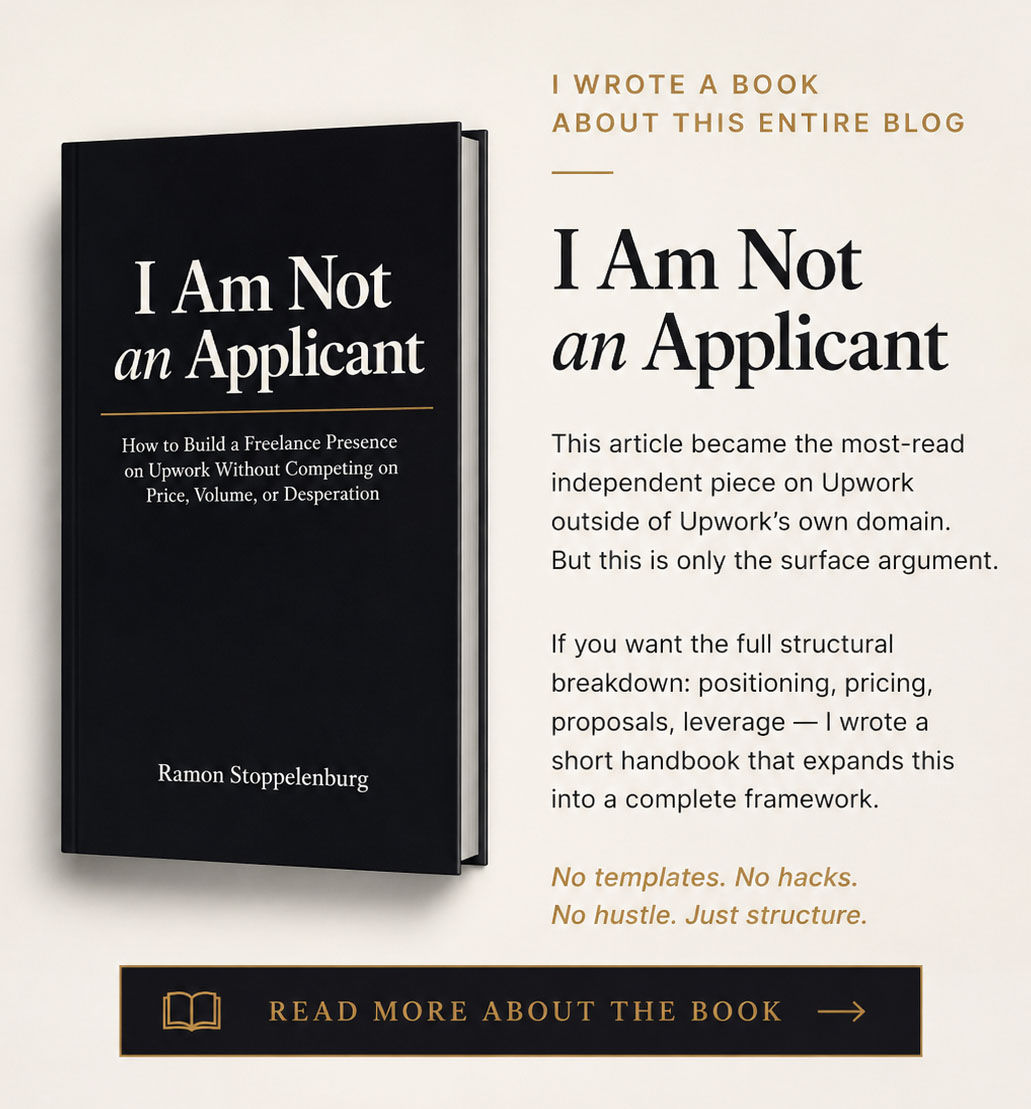
(Article continues below my book announcement.)
Upwork Gets a Lot of Flak
I’ve had people look genuinely puzzled when I tell them I still use Upwork. The fees. The competition. The whole race-to-the-bottom thing. And they’re not wrong that those problems exist — I’ve run into all of them.
My experience has just been different.
Not because I have some secret angle, but because I never treated the platform as a shortcut. I treated it like a slow build. No mass-blasting proposals. No copying templates. I figured out how to write a pitch that sounded like me. Then I kept showing up until that actually started working.
Once it clicked, Upwork stopped being a freelancing platform and started being infrastructure. The thing my work actually runs on.
Wait — what is Upwork?
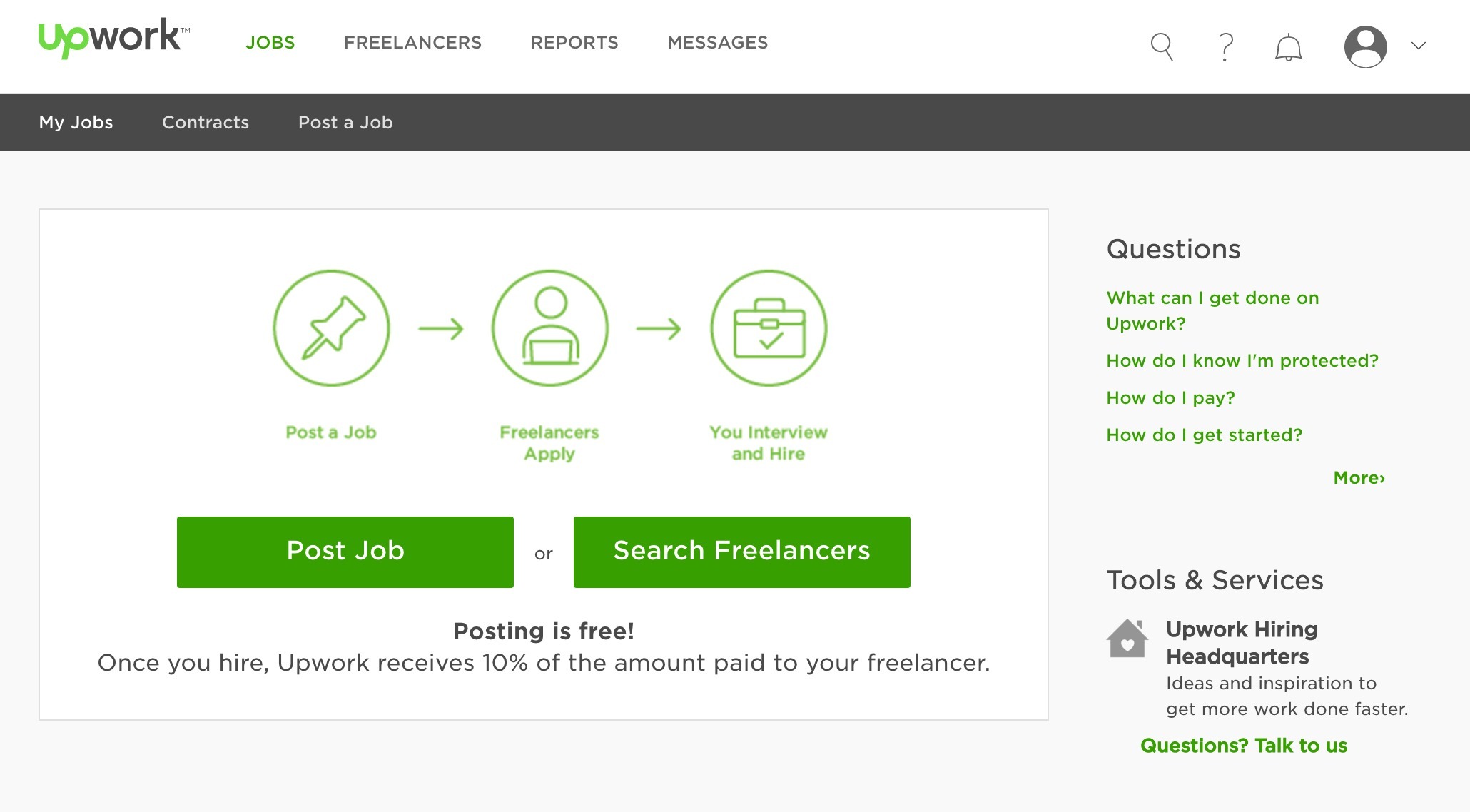
Quick version, for anyone who hasn’t used it: Upwork.com connects freelancers with clients around the world. Writers, designers, developers, translators, marketers — if it can be done remotely, it’s on there somewhere.
The platform takes a cut — currently 10% to 15% depending on your earnings with each client. In exchange, they handle contracts, weekly payments, escrow, disputes, and time tracking if you want it.
Which means I spend my time doing the actual work rather than administrating around it.
Why I Stay: The Freedom Thing
I was never going to last in a normal job. My bio makes that fairly obvious. The daily commute, the same desk, asking someone’s permission to go eat lunch — all of that made my skin crawl long before I had a better option.
Freelancing through Upwork gave me a way out of it entirely. I answered a client message last year from a café partway up Kilimanjaro, between acclimatization days. I’ve edited documents on a balcony in Sri Lanka with the ocean in front of me. I’ve taken calls barefoot in Portugal after a swim. The locations change constantly; the work gets done regardless.
That’s not a side benefit. That’s why I’m doing this at all.
What I didn’t expect was how much it compounds. Four years in, I’m better at managing my time, sharper about which clients are worth taking on, and clearer on what I charge. I’m not burning out. I’m not dreading the week ahead. Whatever I’ve built here is actually mine.

The Work Itself
The variety has been one of the genuinely unexpected things about this. One week I’m translating a romance novel set in small-town Canada; the next I’m line-editing an investor pitch for a Berlin startup; the week after that a major streaming network drops into my inbox needing urgent Dutch legal document translations, yesterday if possible.
I’ve worked with CEOs, published authors, first-time entrepreneurs who built their whole business on a laptop. Some jobs last a day. Others have been going for three years straight with the same client, who by now just sends me things without much explanation because they know how I work and I know what they need.
That kind of relationship doesn’t come from a job board. It comes from showing up consistently and not cutting corners. I’ve also learned more about how different industries actually communicate — startups versus publishers versus legal versus entertainment — than I could have picked up in any single office over the same period.
The Part Nobody Mentions: Getting Paid
Off-platform freelancing has one recurring nightmare: the invoice that goes nowhere. You do the work, you send the invoice, and then you wait. A week. Three weeks. You send a polite follow-up. You wait again. Eventually you start wondering if you’re going to have to write it off and move on.
I spent years dealing with that before Upwork. I despised it.
In four years on the platform, I haven’t had to chase a single payment. The escrow system means the money exists before I start. When I deliver, it releases. If something goes sideways, Upwork support steps in. Even for urgent jobs — especially for urgent jobs — I wait until the contract is in place before I open a single file. The clients worth working with accept that without complaint. The ones who push back on it are usually the ones who’d disappear on payment anyway.
Not having to send those follow-up emails anymore — that alone is worth a lot.
About Those Fees
Upwork runs a variable service fee, currently between 0% and 15% depending on your lifetime billings with a given client. Last year that added up to over $5,000 out of my earnings.
For context: that’s roughly two years of beach apartment rent in Sri Lanka, where I’ve stayed more than once. Real money.
But that money bought access to a pipeline of work I didn’t have to generate from scratch. It bought a profile with enough reviews that new clients don’t need convincing. It bought functioning payment infrastructure across multiple currencies and countries, which is not a small thing when you’re working with clients in the US, Germany, the Netherlands, Australia, and Cambodia in the same month.
Starting out, the platform credibility matters more than people admit. You’re not cold-pitching strangers and hoping they’ll trust you. The track record is visible. That matters.
Would I rather keep that 10%? Yes, obviously. But the life this setup enables isn’t one I’d trade to save on the fee. The percentage isn’t the point. What it actually buys is.
If this resonates, understand this: Upwork is not broken. But most freelancers are playing it wrong — operating as applicants in a marketplace that rewards posture, not volume.
I wrote a short handbook explaining exactly how the game works, and how to stop competing on price, visibility, and desperation. You can read about it here.
It’s Not All Fine, Either
The first few months were genuinely rough. I sent proposals that got no response at all. Not a rejection — just silence. That goes on long enough and you start questioning whether you’ve miscalculated something fundamental.
And even now, some clients arrive with a firm idea that experienced work should cost entry-level rates. That never really stops; you just get faster at recognizing it in the first message and moving on.
The platform itself has its own frustrations. Profile visibility shifts with no clear explanation. Algorithms that seem to reward activity metrics you can’t fully control. One month you’re getting invitations; the next month nothing has changed on your end but the flow has dried up.
There’s also the reality that this is a business, not a passive setup. Upwork handles contracts and payments. Everything else — managing your schedule, keeping your profile current, responding to clients quickly, knowing when to push back on scope — that’s yours. It requires actual attention.
What changes over time is that you stop hoping it gets easier and start getting better at it. You learn the difference between a client who’s difficult and one who’s genuinely worth the difficulty. You get sharper about what you charge and why. The platform that felt unpredictable in year one starts to feel workable, then reliable, then genuinely yours.
For Anyone Starting Out
Upwork isn’t frictionless. The first few gigs take real effort, and the competition is actual competition. But once you find your footing, the infrastructure holds.
If you’re weighing whether it’s worth starting: it was worth it to me when I had nothing on my profile and no idea if it would work, and it’s still worth it now. That’s about as honest an answer as I can give.
If you’re already on Upwork and stuck, I’m happy to compare notes. Get in touch. I remember what those first months of silence felt like, and I’m not going to pretend I figured everything out immediately.
If you’re brand new and want step-by-step onboarding advice: the Upwork website has thorough resources for that, and it’ll serve you better coming from them directly than from me. Once you’ve landed your first few jobs and you’re trying to figure out what’s next — that’s when we have something to talk about.
Ramon.
This article was the spark.
The full argument — how to fix your profile, stop competing on price, build leverage without flooding the system with proposals — is in my short handbook:
I Am Not an Applicant
How to Build a Freelance Presence on Upwork Without Competing on Price, Volume, or Desperation
Before you buy more Connects, read this first.